If you haven’t watched The Devil Wears Prada, then as Mushu once said, “Dishonor! Dishonor on your whole family! Dishonor on you, dishonor on your cow!” It’s a must-watch. The story follows Andy, a recent college graduate who aspires to be a journalist, despite having little experience. She lands a job at Runway magazine as an assistant to Miranda Priestly, a formidable, perfection-obsessed editor-in-chief.
At first, Andy thinks fashion is a superficial facet of society. Her lax attitude conflicts with Miranda’s high-octane standards, resulting in the famous “belt scene.” Surrounded by anxious staff, Miranda is asked to choose between two nearly identical belts. Andy mistakenly chuckles under her breath. Miranda quickly calls it out, demanding an explanation. Andy tries to save face by saying, “It’s just that both those belts look exactly the same to me. You know I’m still learning about this stuff.” Miranda replies with one word in a distasteful tone, “stuff.”
Miranda then goes on a powerful tangent. She starts by saying, “You… go to your closet, and you select… I don’t know, that lumpy blue sweater, for instance, because you’re trying to tell the world that you take yourself too seriously to care about what you put on your back, but what you don’t know is that that sweater is not just blue, it’s not turquoise, it’s not lapis, it’s actually cerulean.” She recounts the original popularity of that exact blue. It then inspired another designer to create jackets of the same hue. Eventually, department stores jumped on the trend. Miranda ends her monologue with this: “However, that blue represents millions of dollars of countless jobs, and it’s sort of comical how you think that you’ve made a choice that exempts you from the fashion industry when, in fact, you’re wearing a sweater that was selected for you by the people in this room… from a pile of ‘stuff.’”
After this point, Andy becomes aware that fashion has power. She realizes that fashion is both a mirror and a driver of culture. By the film’s conclusion, she must decide which version of herself she will embrace: the culturally attuned idealist or the unknowing participant in a world shaped by invisible forces.
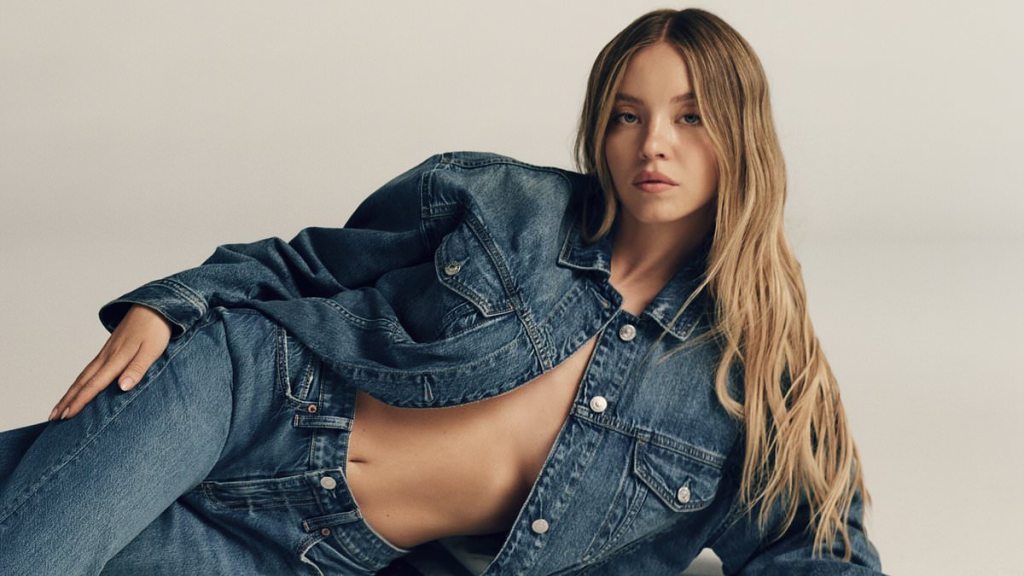
I bring up Miranda and Andy for a specific reason. The fashion industry has generated significant controversy this week. American Eagle’s recent campaign featuring Sydney Sweeney has sparked a heated debate. On the surface, it’s nothing more than a familiar brand, a beautiful face, and a pair of jeans. But beneath the denim veneer is an array of interpretations. Many see the campaign as a return to traditional standards of beauty. Others detect subtle undertones of exclusion: eugenics, racial bias, and appeals to the male gaze. Some individuals dismiss the controversy entirely, pointing only to the campaign’s noble cause: domestic violence survivors. In my view, bad actions in the name of a good cause are still bad actions. The campaign might have benefited from a sensitivity reader—someone trained to catch the cultural implications before release.
Here we are, in the role of Andy, but which version of her: the one wearing the lumpy blue sweater, or the one who knows it’s called cerulean? Is this new Sydney Sweeney campaign just some “stuff,” or is it something intentionally selected by a group of board members for a specific purpose?
Unfortunately, I’m no Miranda. I can’t claim to know every intention stitched into that campaign. But I can say that fashion ripples outward. It shapes perceptions of identity, power, and status. We must learn to recognize the stories advertisements silently tell us. The devil is, after all, always in the details. So, ask yourself, what is the devil choosing to wear?


 PolyProse
Leave a comment