I heard the term “Ghost Lashes” recently. For those unaware, ghost lashes refer to when someone doesn’t wear any eyelash-enhancing products. In other words, no mascara, no falsies, no eyeliner. This “new” idea has started to gain some popularity. Of course, there are people proudly refusing to leave their homes without falsies. There’s been some discourse over eye makeup, but I think the deeper issue here is rebranding natural lashes as a trend.
The beauty industry constantly questions and over-examines women. Features that are undesirable one year may become coveted the next. Girls are bullied for having freckles, and then models with a “faux sun-kissed appearance” become fashionable. However, the beauty industry has a history of negatively impacting our health.
I remember one day when the class was waiting for the gym teacher. To waste some time, girls lined up shoulder to shoulder. Then the most popular of them turned on her phone flashlight. She walked around them and held the phone between their legs. If the light flashed to the other side, then she congratulated them for having a “thigh gap.” (It was one of the first time I was glad to be a male.) I thought that kind of behavior would die off. But it’s been around longer than I have.
In the 1990s, “Heroin Chic” was the beauty standard for models. Thin women with dark eyes and stringy hair were paraded out on stages to sell products. However, the young populace bought their messaging instead. Eating disorders and drug addiction grew to ridiculous heights. The song “Orange Juice” by Melanie Martinez comes to mind. I don’t quite understand how that kind of messaging could have become the “trend.”
However, beauty has always had an ugly element. The Venetian era had women smothering their faces with lead and vinegar. The Romans used cinnabar, which contains mercury, as blush. The Victorians romanticized consumption for its pale skin and rosy lips. The most dedicated women even visited sanitariums to contract the deadly disease. The Edwardian era saw woman corseting so tightly that their ribcages became deformed. Foot binding and other mutilations in the name of beauty won’t hide from this discussion either. It’s unbelievable to think some victims are still alive today.
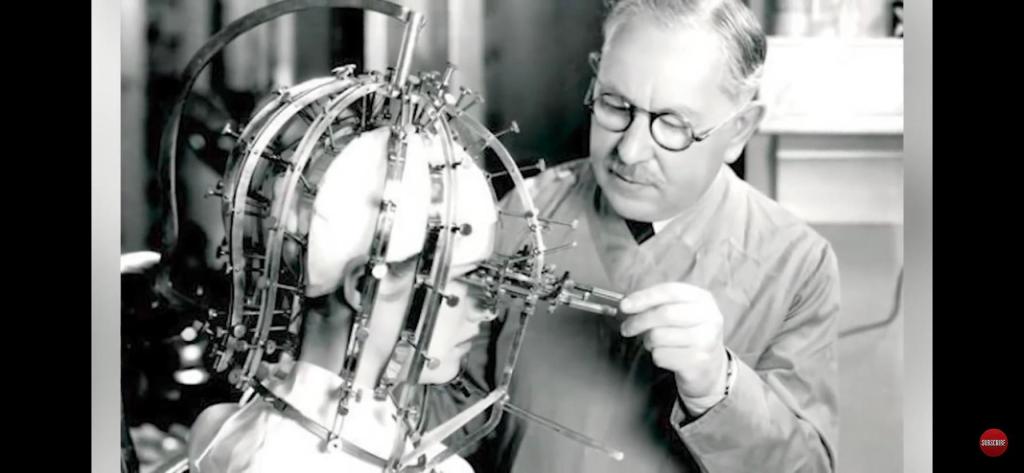
I know those examples are more extreme, but in the 1930s, we had “Dimple Machines.” Women sat in chairs while an apparatus went around their heads. It painfully pinched the cheeks. At the same period existed the “Beauty micrometer.” It resembled a cage with several dials. The purpose was to identify areas of the face that needed enhancing or disguising with makeup.
The 1950s saw women trying to appear soft and overtly feminine. The goal was to emulate a societal desire to return to traditional gender roles after World War II. It’s funny to think that in the 1960s, androgynous silhouettes would become the craze. In response to the hyper-stylization, natural feminine features re-emerged in the 1970s. Then in the 1980s, the fitness boom took over the world. Everyone wanted to wear leg warmers with bright colors and walk around in toned athletic physiques. The goal of “thinness” became an extreme. It’s no surprise that heroin chic came next.
It seems we’ve returned to where we started. So, let’s talk about this modern “ghost lash” trend. Beauty is cultural. You have to look at society and ask if this minimalist aesthetic is in response to a looming recession. Perhaps it’s to combat the heavy makeup usage of the past decade. What’s feeding the trend may be significant, but I think it’s much more important to ask where it is going. Will we fuel another decade of disfigurement and dysmorphia, or are we heading in an accepting and inclusive direction? The choice is ours: wear false lashes or don’t but be conscious of why you’ve chosen so. Is it because that’s what you like, or is it because our bodies have become a trend?


 PolyProse
Leave a comment